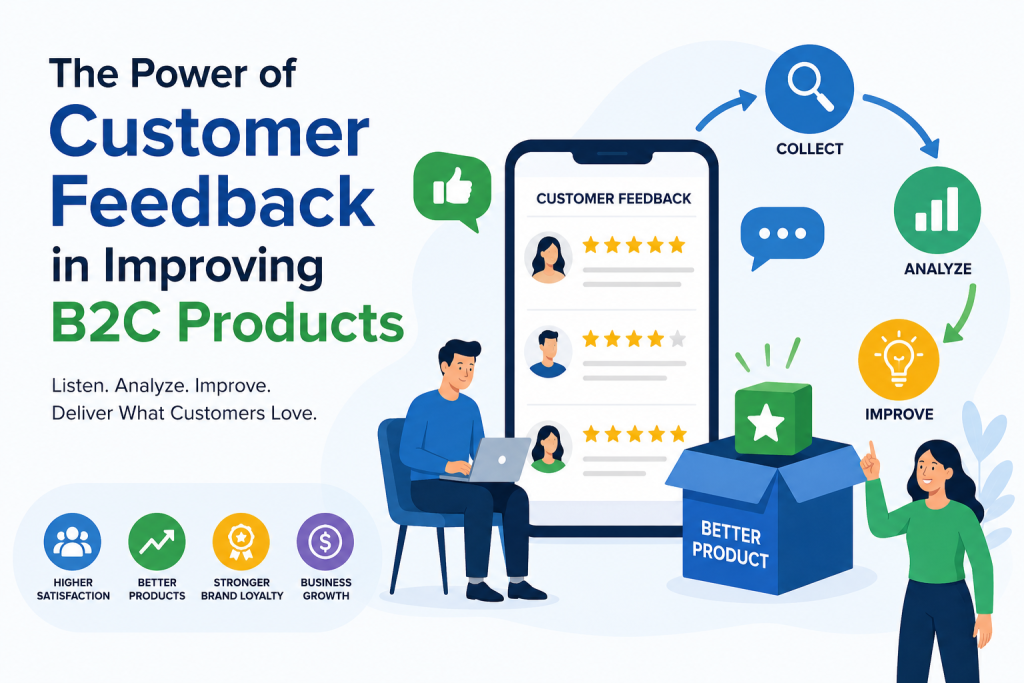
The Power of Customer Feedback in Improving B2C Products
Introduction
In the competitive B2C landscape, understanding what customers truly want is key to building successful products. Customer feedback serves as a direct line to user expectations, preferences, and pain points. When used effectively, it helps businesses refine products, enhance user experience, and build stronger relationships. Leveraging feedback not only reduces guesswork but also ensures that products evolve in line with real customer needs and market demands.
What is Customer Feedback?
Customer feedback is the information, opinions, and insights shared by users about their experiences with a product or service. It can be collected through surveys, reviews, social media, customer support interactions, and direct interviews.
Why Customer Feedback Matters in B2C Products
1. Improves Product Quality
Feedback highlights product flaws, bugs, and usability issues, enabling businesses to make necessary improvements and deliver better quality products.
2. Enhances Customer Experience
Understanding customer expectations helps businesses create smoother, more intuitive experiences that increase satisfaction and retention.
3. Drives Innovation
Customers often suggest new features or improvements that businesses may not have considered, leading to innovation and product evolution.
4. Builds Customer Trust and Loyalty
When customers see their feedback being implemented, they feel valued, which strengthens trust and long-term loyalty.
5. Reduces Product Failure Risk
Continuous feedback helps validate ideas before and after launch, minimizing the chances of failure in the market.
Types of Customer Feedback
- Direct Feedback: Surveys, interviews, and feedback forms
- Indirect Feedback: Social media comments, reviews, and ratings
- Behavioral Feedback: Data from user interactions and product usage
- Support Feedback: Insights gathered from customer service interactions
Effective Ways to Collect Customer Feedback
1. Online Surveys
Quick and scalable way to gather structured insights from a large audience.
2. Customer Reviews and Ratings
Provide honest opinions about product performance and user satisfaction.
3. Social Media Listening
Monitoring platforms to understand real-time customer sentiment and trends.
4. User Interviews
In-depth conversations that uncover deeper insights into customer needs and motivations.
5. Feedback Widgets and In-App Prompts
Collect real-time feedback directly within the product experience.
How to Use Customer Feedback Effectively
1. Analyze and Prioritize
Not all feedback is equally important. Identify patterns and prioritize changes that have the biggest impact.
2. Close the Feedback Loop
Inform customers when their feedback leads to improvements. This builds trust and engagement.
3. Integrate with Product Development
Use feedback as a key input in product design and development cycles.
4. Combine Quantitative and Qualitative Insights
Numbers show trends, while comments explain the reasons behind them.
5. Continuously Monitor Feedback
Customer expectations evolve, so feedback collection should be an ongoing process.
Challenges in Using Customer Feedback
- Managing large volumes of data
- Identifying actionable insights
- Dealing with biased or inconsistent feedback
- Balancing diverse customer opinions
Benefits of Leveraging Customer Feedback
- Better product-market fit
- Increased customer satisfaction
- Higher retention and loyalty
- Faster innovation cycles
- Stronger brand reputation
Conclusion
Customer feedback is one of the most valuable assets for improving B2C products. It provides real-world insights that help businesses refine offerings, enhance user experiences, and stay aligned with customer expectations. Organizations that actively listen and respond to feedback are better positioned to succeed in a dynamic market.
At Philomath Research, we help businesses harness the power of customer feedback through advanced research solutions and data-driven insights, enabling smarter product decisions and sustainable growth.
FAQs
1. What is customer feedback in B2C products?
It is the information shared by customers about their experiences, preferences, and expectations regarding a product.
2. Why is customer feedback important?
It helps improve product quality, enhance customer experience, and guide business decisions.
3. How can businesses collect customer feedback?
Through surveys, reviews, social media, interviews, and in-app feedback tools.
4. What is the best type of feedback?
A combination of quantitative (data) and qualitative (opinions) feedback provides the most value.
5. How often should feedback be collected?
Continuously, as customer preferences and market trends change over time.
6. Can negative feedback be useful?
Yes, it helps identify problems and areas for improvement.
7. How do you prioritize feedback?
By analyzing patterns, impact on users, and alignment with business goals.
8. What is a feedback loop?
It is the process of collecting, analyzing, acting on feedback, and informing customers about improvements.
9. What challenges come with customer feedback?
Managing large data volumes, filtering useful insights, and addressing diverse opinions.
10. How does feedback improve customer loyalty?
When customers see their input being valued and implemented, they feel more connected to the brand.